Leading From Behind:
The Subtle Power of Reflexive Control
Sometimes the smartest way to lead isn’t to charge out front.
It’s to quietly shape the path so others walk it willingly.
That’s the essence of reflexive control — a Soviet-born tactic that’s now better understood as simply “leading from behind.”
It’s not about manipulation in a dark way. It’s about influence, timing, and subtle nudges that guide choices without force.
What Is Reflexive Control?
In simple terms:
You don’t tell people what to do.
You shape the environment, information, or choices so that the decision they make naturally aligns with what you wanted all along.
Think of it as mental judo. Instead of pushing head-on, you use the other person’s momentum.
- In chess, you make a move that looks weak, and your opponent “falls” into your trap.
- In daily life, you mention you’re craving a dish only one restaurant serves. Your friend then “chooses” that restaurant for dinner.
They believe it was their idea — but you quietly guided the outcome.
The Four Angles of Leading From Behind
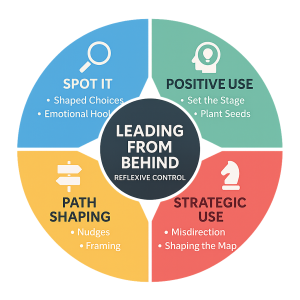
Here’s a simple model I call the Leading From Behind Compass:

- North: Spot It (Defence)
Learn to recognise when it’s being used on you. Shaped choices, emotional hooks, false frames — all signs someone’s trying to steer your decision. - East: Positive Use (Coaching & Leadership)
Great leaders don’t bark orders. They ask the right questions, set the stage, plant seeds. The team feels ownership of the decision. - South: Strategic Use (Negotiation & Influence)
In business, you might redirect attention, shape the map of options, or time your input so the deal swings in your favour. - West: Path Shaping (Nudges & Framing)
This is the everyday version. The way you frame an option or plant a gentle nudge makes it more likely people take the path you want.
At the centre? Leading from Behind. It’s influence without force.
Why It Matters Today
We live in a world full of influence: marketing, politics, negotiation, coaching.
Knowing this tactic helps in two big ways:
- Defence — so you don’t get steered without realising.
- Positive Use — so you can guide outcomes ethically, in ways that serve everyone.
In business, in leadership, even in family life — the art isn’t always in shouting louder. It’s in letting others believe they own the choice, while you’ve shaped the ground beneath their feet.
The Takeaway
“Leading from behind” is about guiding without grabbing the wheel.
It’s about influence, not control.
And when used positively, it can turn you into the kind of leader people want to follow — because they feel like they’re following themselves.