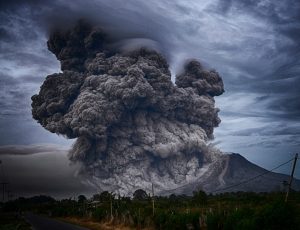
How Ready Should I Be?
I’ve lived through empty streets before.
Covid
No flights.
No tourists.
No noise.
It wasn’t the end of the world.
But it was a preview.
Then there was 5 days flooded out.
No food in
No Shopping
Panic Buying
Almost Looting…
Empty Shelves of Everything
And it made me ask a better question.
Not “Will there be an apocalypse?”
But…
How ready should I actually be?
First, Let’s Calm Down
Most “apocalypses” aren’t Hollywood.
They’re:
Supply chain delays.
Bank outages.
Fuel shortages.
Cyclones & Storms
Volcanic ash clouds.
Border closures.
Digital systems going down.
Life doesn’t explode.
It wobbles.
And wobble is enough.
Asia vs Australia (FNQ)
Two homes.
Two risk profiles.
Two very different resilience stories.
Bali:
Island dependent.
Fuel imported.
Food partly imported.
Tourism heavy.
Community strong.
Port Douglas:
Cyclones.
Floods.
Road cut-offs.
Stronger infrastructure.
National safety net.
So where’s safer?
Depends on what breaks.
Natural Disaster?
Volcano in Bali?
I’d rather be in Port Douglas.
Category 5 cyclone in Far North Queensland?
Maybe I’d rather be inland Bali than on the coast.
Low-lying beach zones?
Never ideal.
Elevation matters.
Water access matters.
Build quality matters.
Pandemic 2.0?
Healthcare strength matters.
National coordination matters.
Australia probably wins.
But low population density wins anywhere.
Financial System Shock?
If banks freeze?
Cash matters.
Diversification matters.
Local informal economies sometimes cope better than highly financialised ones.
But political stability matters too.
Where would currency collapse hurt more?
Where would civil unrest spark first?
Good questions.
Cyber or Grid Failure?
If the power goes out.
If the internet disappears.
If payment systems stop.
Can you eat?
Can you drink?
Can you communicate?
Can your community function without apps?
A rural Balinese village might adapt faster than a tech-dependent suburb.
But medical access changes that equation quickly.
Regional Conflict?
Closer to flashpoints?
Or aligned with military alliances?
Is neutrality safer?
Or strength?
Is remoteness protection?
Or isolation?
Hard to model.
The Real Pattern
High density tourism zones?
Most fragile.
Coastal low-lying property?
Most vulnerable.
Debt-heavy lifestyles?
Least flexible.
Mobility?
Underrated.
Community?
Critical.
So How Ready Should I Be?
Not bunker-level.
Not reckless either.
Ready for:
7 days of disruption.
30 days of inconvenience.
90 days of instability.
Water stored.
Food buffer.
Cash on hand.
Documents printed.
Solar backup.
Go bag ready.
Calm. Not crazy.
The Bigger Question
Preparedness isn’t about gear.
It’s about options.
Can I stay?
Can I leave?
Can I operate offline?
Can I function without instant tech?
Can I live simply?
Can my neighbours?
And then the uncomfortable one.
If it all goes belly up.
No tech.
No financial system.
No functioning government.
Then what?
What skills matter?
Where would I stand?
Who would I trust?
What would still have value?
And more importantly…
Would I be ready for that world?
What’s your current readiness level — honestly?